Module 7: Feeling Resourced
Welcome to module 7.
This course is broken into a series of modules and lessons. You may scroll down the lessons on each module, or use the links in the menus on the left to jump to any point within each module.
Practice: 10 Small things to be grateful for
In this practice you are invited to “count your blessings” using your fingers and thumbs.
Allow yourself to settle into the practice and spend the next 10 minutes bringing to mind 10 small things that you are grateful for.
Savour each thing that comes to mind, and hold onto each finger as you let that experience linger, and then slowly move across each of your digits.
Examples of small things we can be grateful for are, hot water, a cup of coffee, a smile from a loved one, a sunny sky, a pen that works etc.
Building resources and creating a sense of stability
As we come towards the end of the programme, it’s a good time to reflect on all the practices you have learnt, and also to continue to build your those resources through experiencing more practices.
Grab your notebook and put together a list of all the practices you have learnt in the programme, and also add in any tools that you do yourself that help you feel grounded and in the moment, for example, Mindful eating, STOP, affectionate breathing, taking a walk.
3 ways to correct negativity bias
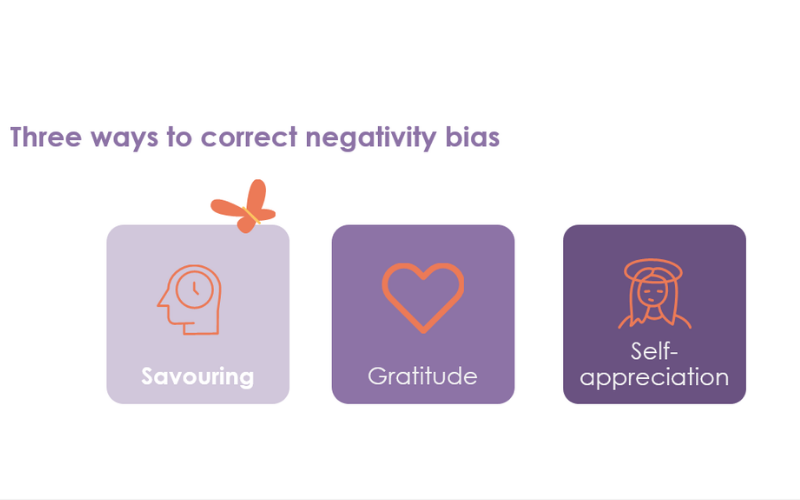
We explored the negativity bias early on in the course and have done two practices that can help us balance out the negativity bias and really warm up our inner atmosphere:
Taking in the Good (module 4)
Gratitude practice (from the start of this module)
Take a moment to recall these practices and how you found the experience.
There is a third way to correct the negativity bias and we will introduce it to you in the next lesson.
Awakening Rights, by Mark Nepo
We waste so much energy trying to cover up who we are when beneath every attitude is the want to be loved
and beneath every anger is a wound to be healed
and beneath every sadness is the fear that there will not be enough time.
Our challenge each day is not to get dressed to face the world
but to unglove ourselves so that the door knob feels cold and the car handle feels wet
and the kiss goodbye feels like the lips of another being soft and unrepeatable.
Practice: Self-appreciation
Which exercise was easier for you: Gratitude (10 things on fingers and thumbs) or Self-appreciation?
Did self-appreciation feel easier when you brought in gratitude for others?
Were you able to do this without judgements or criticisms of yourself and with compassion for yourself? Or was it difficult for you and if so, how?
How did you feel at the end of the exercise?
Practice: Abdominal breathing
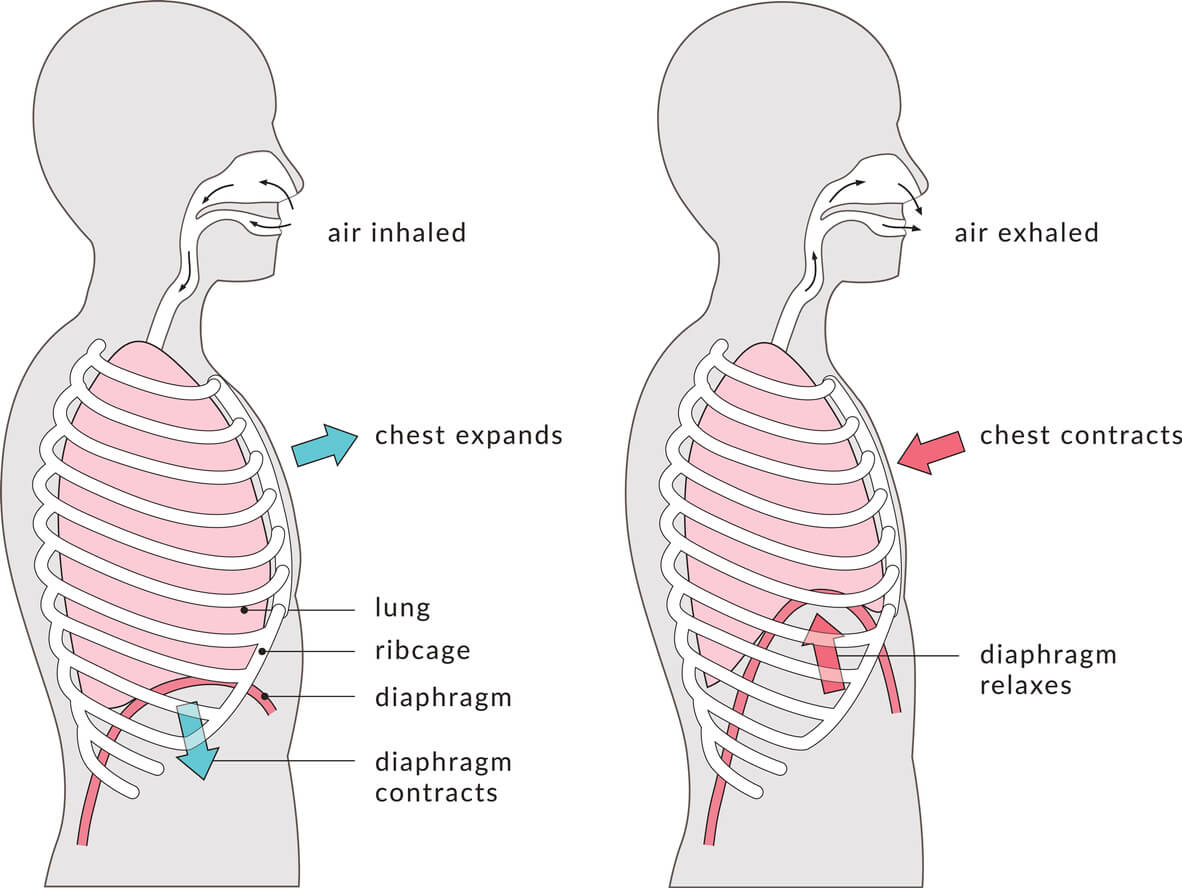
Abdominal breathing is also known as diaphragmatic breathing.
The diaphragm is the large muscle located between the chest and the abdomen. When it contracts the dome is forced downwards, displacing the abdominal organs and causing the abdomen to expand. This causes negative pressure within the chest, forcing air into the lungs quite naturally and pulling blood into the chest, which improves the venous return to the heart. Venous return maintains steady blood flow.
To breathe out, the diaphragm domes upwards, creating more space in the abdomen for the organs to return to their original position. This flattens the belly and air is pushed out of the lungs.
Take a deep breath now before moving on.
After the video has finished, remember to do your after practice inquiry.
Spend a little time, perhaps a minute or two, in reflection, noticing what the experience was like, asking yourself questions such as these:
- What did you notice inside your body?
- Did you notice where in your body you felt emotions?
- Were you aware of what was happening in your mind?
- How did you react when you noticed what your mind was doing?
- Did bringing awareness to your thoughts change your experience?
- Is there a familiar pattern emerging here?
- Can you identify your experience with other areas of your life, your relationships for example?
- How do you think it would feel to bring compassion in here?
- How could you transfer what you have learnt through this practice to benefit your life?
Practice for Module 7
Remember to take your time to practice, use your inquiry questions and journal, before moving on to module 8.
Practice the abdominal breathing practice this week and also reflect on the self-appreciation exercise
Do continue to bring mindfulness to your daily activities and make the other practices a part of your routine.