Welcome
Welcome to module 4.
This course is broken into a series of modules and lessons. You may scroll down the lessons on each module, or use the links in the menus on the left to jump to any point within each module.
Two different Modes of Mind
Humans have two different modes of mind – doing and being – and with mindfulness we are able to step out of doing and into being, allowing us to turn down our stress response, gain perspective and offer our physiology the opportunity to recharge.
Where do you spend most of your time? Is that changing?
“Doing” versus “Being” Modes of Mind
Doing mode (thinking self)
- Automatic pilot
- Analysing
- Striving
- Avoidance
- Past and future
- Thoughts as facts
- Depleting
Being mode (observing self)
- Conscious choice
- Sensing
- Accepting
- Approaching
- Present
- Thoughts as events, not facts
- Nourishing
Remember: Mindfulness is not saying “Doing” mode is wrong but it’s about making a conscious choice as to which one is more appropriate and supportive at that moment.
Pause for a moment and reflect on the following poem.
Two Kinds of Intelligence
There are two kinds of intelligence: one acquired,
as a child in school memorizes facts and concepts
from books and from what the teacher says,
collecting information from the traditional sciences
as well as from the new sciences.
With such intelligence you rise in the world.
You get ranked ahead or behind others
in regard to your competence in retaining
information. You stroll with this intelligence
in and out of fields of knowledge, getting always more
marks on your preserving tablets.
There is another kind of tablet, one
already completed and preserved inside you.
A spring overflowing its springbox. A freshness
in the center of the chest. This other intelligence
does not turn yellow or stagnate. It’s fluid,
and it doesn’t move from outside to inside
through conduits of plumbing-learning.
This second knowing is a fountainhead
from within you, moving out.
Rumi
Learning to respond rather than react and the role of kindness
As we start to become more aware, it’s important to create a space between an emotional event and what choices we make, as to how best to deal with them.
"Between stimulus and response, there is a space. In that, space is our power to choose our response. In our response lies our growth and our freedom."
-- Dr Victor Frankl
Here’s an example of how to create that space when feeling anxious, stressed or experiencing an emotionally charged situation.
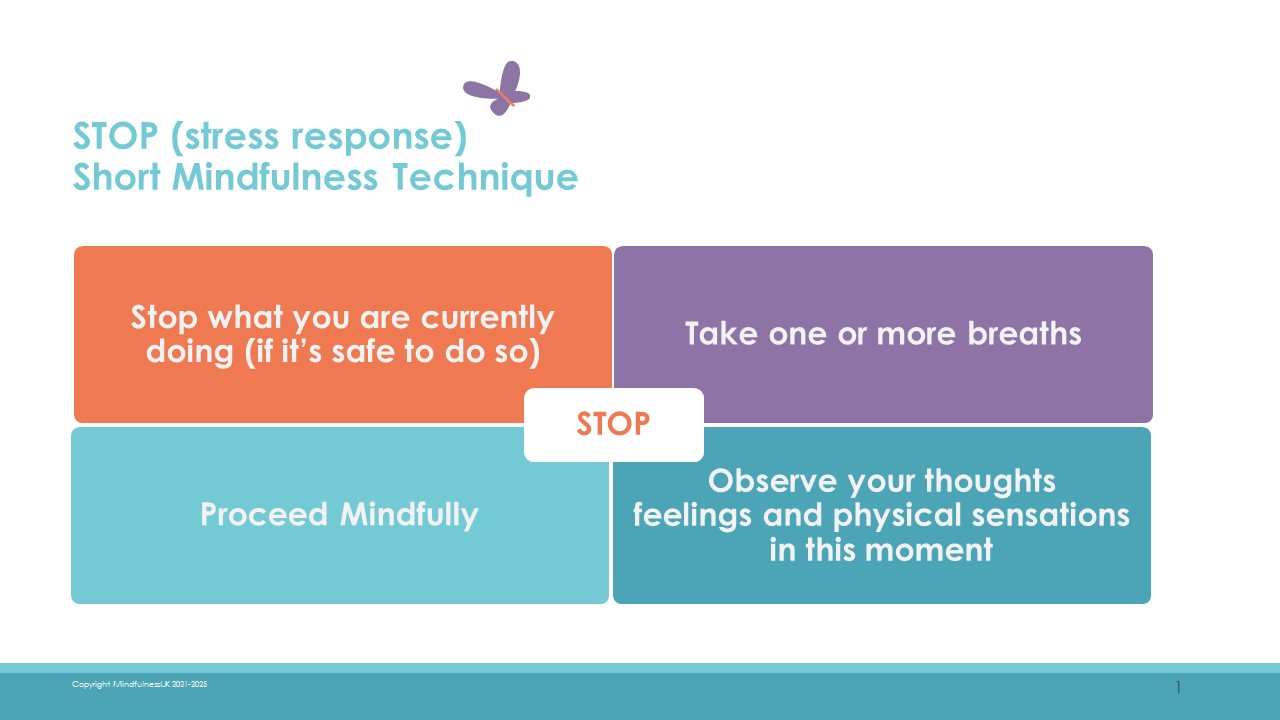
In this video you will learn more about what it means to respond rather than react, and experience the STOP practice.
There is always an opportunity to bring kindness and compassion into our practice, and our choices, both for ourselves and others.
Once you have created that space, Kindness has a role to play.
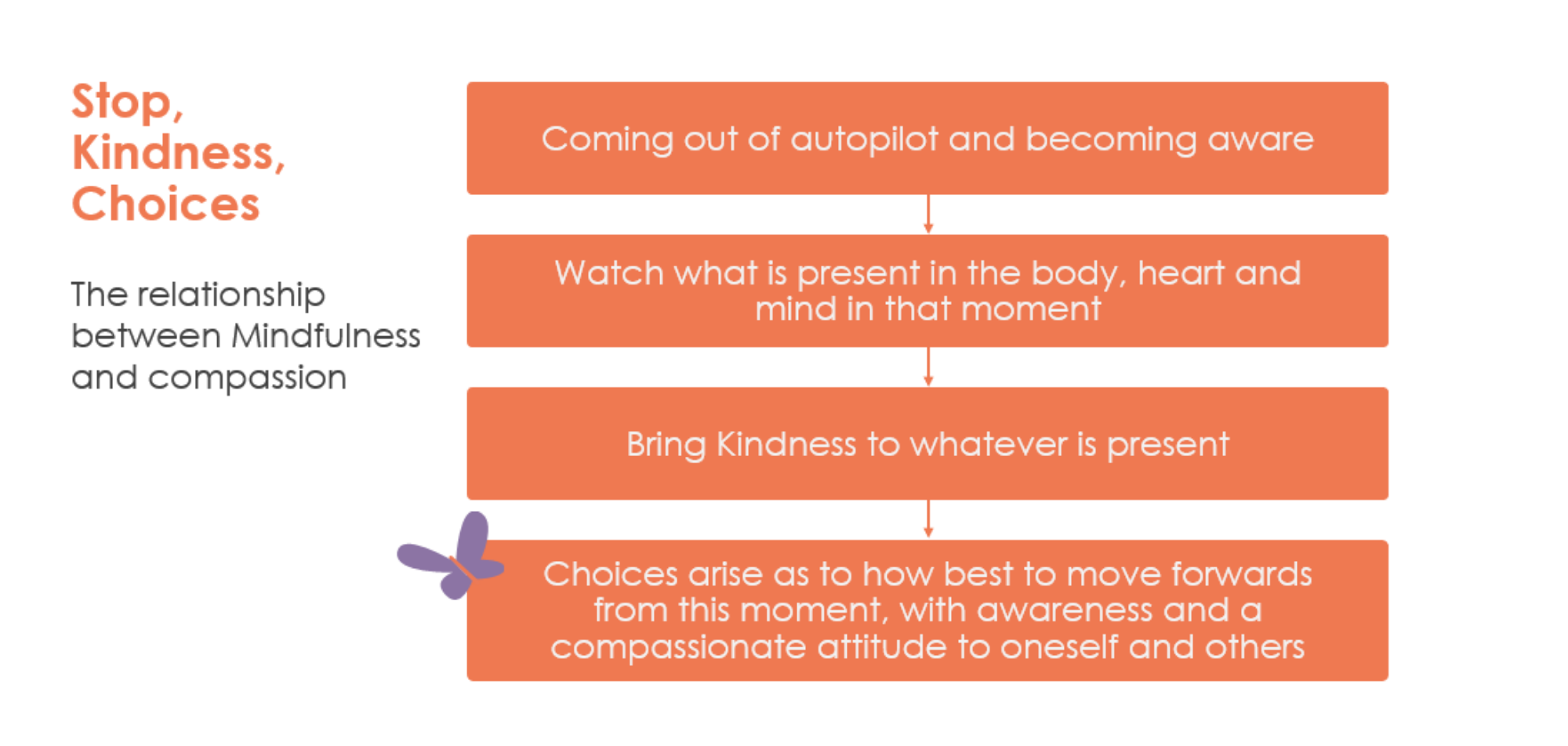
Treat yourself like someone you deeply care about
Self-compassion can be cultivated by bringing an attitude of treating yourself as you would a loved one.
For this exercise you need a pen and paper.
Imagine you are walking along a road with a dear friend or loved one, and they fall over. Take a moment to consider what you do when this happens, what do you say, how do you behave, what is your tone and how do you feel.
Write down everything that comes to mind.
Now, imagine that you are walking along a road with a dear friend or loved one, and you fall over. Take a moment and consider what you do when this happens, what do you say, how do you behave, what is your tone and how do you feel.
Write down everything that comes to mind.
Now, compare your lists and notice how it feels to read them and to become aware of the difference between how you treat others and how you treat yourself.
When we cultivate self-compassion, we can start to offer ourselves what we need in the moment which helps to build our levels of resilience and feel resourced to manage the suffering we all experience in life.
Sustainers and Drainers
Another way we can bring self-compassion to ourselves is with self-care, and doing more things in our days that make us feel better.
Use your journal to work through the following prompts
Start by considering your drainers: What are the things in your life that drain you, write these down (the news, other people, being tired, social media, work, the weather)
Now consider your sustainers: What are the things in your life that energise you and make you feel better, write these down (being with other people, walking, pampering, eating well, exercise, sleep)
Now consider: Are you able to let go of some of the drainers? Are you able to build more things into your life that sustain you?
Examples
- Spending time with friends & family
- Connecting with colleagues at work
- Taking good care of yourself
- Dancing
- Pampering
- Walking
- Diet and drink
- Having fun
Taking in the good practice
This is a technique for learning how to consciously build positive mental and emotional strengths by spending time, savouring our current experiences or recalling positive experiences from the past, being mindful of memory, in relation to the people or animals we care about or the places we love. We spend so much of our time rushing around that we can miss opportunities to appreciate what is right under our noses. We can thank neuroscientist Rick Hanson for introducing this valuable technique into popular culture he says “The brain is like Velcro for negative experiences and Teflon for the positive”.
By resting our attention on positive experiences with reference to people, pets or places, we are increasing our ability to deal with stress and reactivity, making us more responsive to life’s challenges, strengthening the immune system, and leading us to greater overall happiness. Whatever we give our mental energy and attention to will make a lasting impression on us and our relationships with others, helping us appreciate and connect with those around us.
Learning to communicate mindfully
With greater awareness of how we are and how we relate to ourselves, we start to become more aware of how we relate to others.
Interpersonal mindfulness starts with becoming aware of how we communicate and how we listen.
Learning to communicate well begins with mindful listening skills.
Learning to communicate well with others, whether at work or home, work or socially is enhanced with the ability to listen deeply.
The more we listen, the more we are able to tune into how we are feeling and the emotions of others, thereby resulting in increased levels of Emotional Intelligence.
Without good listening skills, communicating will be compromised and relationships will feel the effects. Learning how to develop the skill of listening on purpose, in the present moment, without having judgement passed on to others, will enhance your life.
Setting an intention to listen and to communicate and listen is important, and can support interpersonal habits and patterns.
There is so much more to listening than just hearing with your ears. It means using everything to listen- your mind, heart, intuition, body, spirit/soul. According to Alidina2 ,in order to listen to someone deeply and mindfully:
- You must stop doing anything else and set your intention to listen deeply.
- Always look the person in the eye when he speaks.
- Focus entirely on them, putting, aside all your own concerns, worries and agenda.
- Really listen to what the person is saying and how he’s saying it.
- Listen with your whole being, your mind and heart, not just your head.
- Be aware of how your posture and tone of voice is part of the listening process.
- Notice your own automatic thoughts as you listen and try to let them go and come back to listening.
- Keep your questions genuine and open rather than trying to change the subject, gently deepening the conversation.
- Let go of judgement, judgmental thoughts, as far as you can.
- Let go of trying to solve the problem, you do not need to give the person the answer.
This week as part of your practice start to become aware of how you communicate and listen, and how others do to and make some notes in your journal.
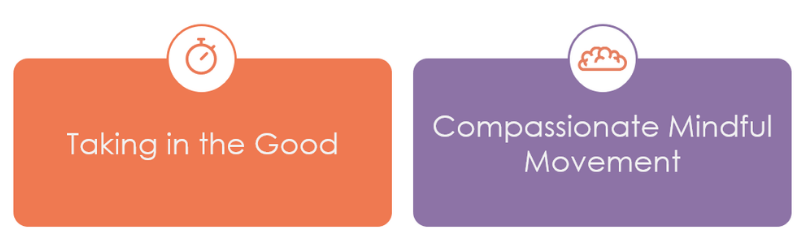
Daily Practice: Taking in the Good and Compassionate Mindful Movement
In the previous lessons we’ve looked at the practice of “Taking in the good” and in the previous module you’ve experienced the “Compassionate Mindful Movement” practice.
Over the next 7 days, incorporate these two practices into your day.
As you do, keep your journal nearby, and be mindful about your review of each practice.
What comes up for you? What do you notice? What changes across the week?
Practice for Module 4
Remember to take your time to practice, use your inquiry questions and journal, before moving on to module 5.
Practice Taking in the Good this week and remember to become aware of how you communicate with others.
Do continue to bring mindfulness to your daily activities and make the other practices a part of your routine.