Module 3: Introducing Emotional Intelligence
Welcome to Module 3.
This course is broken into a series of modules and lessons. You may scroll down the lessons on each module, or use the links in the menus on the left to jump to any point within each module.
What is Emotional Intelligence?
Emotional intelligence has been defined as:
“The ability to monitor one’s own and other people’s emotions, to discriminate between different emotions and label them appropriately, and to use emotional information to guide thinking and behaviour.”
— Peter Salovey and John Mayer
Emotional Intelligence (EI) is a type of social intelligence that builds resilience. This is done by developing traits and skills that increase the capacity for controlling one’s emotions as well as responding appropriately to the emotions of others. These can be learnt and developed over time. The World Health Organization considers EI to be one of the ten life skills that support people to act in an adaptable and positive manner.
Mindfulness meditation has proven to be effective in increasing the well-being of those who practice it, leading to better mental health, self-care and job satisfaction. These studies revealed a positive relationship between mindfulness and emotional intelligence, particularly the capacity to regulate emotions. Furthermore, mindfulness is negatively related to emotional exhaustion. Training interventions based on mindfulness have proven to be useful in promoting emotional balance, emotional awareness, emotional acceptance, emotion recognition, expressive suppression and a reduction in emotional exhaustion.
EI has been shown to positively influence a professional’s bio-psycho-social welfare, increasing their individual resilience, their perception of social support, empathy, job performance and satisfaction, and reducing stress. Developing the ability to manage emotions is critical to health and well-being, especially of those working in environments that hold significant emotional burden or there’s potential for secondary trauma. EI can lead to a reduction in stress and burnout, work absenteeism and is even a predictor of professional success.
You can read the research findings here.
Practice: RAIN and inquiry
This practice helps us to continue to develop self-awareness, noticing how we are and bringing compassion to our experience.
For this, we can use the RAIN acronym.
R - Recognise
A - Acknowledge
I - Investigate
N - Nurture
After the video has finished, remember to do your after practice inquiry.
Spend a little time, perhaps a minute or two, in reflection, noticing what the experience was like, asking yourself questions such as these:
- What did you notice inside your body?
- Did you notice where in your body you felt emotions?
- Were you aware of what was happening in your mind?
- How did you react when you noticed what your mind was doing?
- Did bringing awareness to your thoughts change your experience?
- Is there a familiar pattern emerging here?
- Can you identify your experience with other areas of your life, your relationships for example?
- How did it feel to bring compassion to your practice?
- How could you transfer what you have learnt through this practice to benefit your life?
Stress and its effects
By identifying what causes us stress, we can then build our resources to cultivate emotional intelligence.
There are many different effects of stress.
Affect (emotion)
- Anger,
- Anxiety,
- Depression,
- Guilt,
- Hurt,
- Morbid jealousy,
- Shame/embarrassment,
- Suicidal feelings,
Behaviour
- Accident proneness,
- Aggression/irritability ,
- Alcohol/drug abuse,
- Anorexia,
- Bulimia,
- Avoidance/phobias,
- Checking rituals,
- Clenched fists,
- Compulsive behaviour,
- Decreased/increased sexual activity,
- Eat/walk/talk faster,
- Frequent crying,
- Impaired speech/voice tremor,
- Increased absenteeism,
- Increased nicotine/caffeine intake,
- Loss of appetite/overeating,
- Low productivity,
- Nervous cough,
- Poor driving,
- Poor time management,
- Restlessness,
- Sleep disturbances,
- Insomnia, sulking, teeth grinding, tics, spasms,
- Type A behaviour; competitive hostile, unkempt appearance, withdrawing from relationships
Biology
- Allergies/skin rashes, Asthma, Biologically based mental disorders, Cancer, Chronic fatigue/exhaustion/burn-out, Diabetes, Diarrhoea/constipation/flatulence, Dry skin, Epilepsy, Flu/common cold, Frequent urination, High blood pressure/coronary heart disease, Lowered immune system, Poor nutrition, exercise and recreation, Rheumatoid arthritis
Cognition
- Thinking that: I must perform well,
- Life should not be unfair, self/other damning statements,
- Low frustration statements eg I can’t stand it, I must be in control,
- It’s awful, terrible, horrible, unbearable, I must have what I want, I must obey “my” moral code and rules, Others must approve of me,
- Cognitive distortions eg all or nothing thinking.
Imagery
- Images of: Accidents/injury, Failure, Helplessness, Humiliation/shame/embarrassment, Isolation/being alone, Losing control, Nightmares/distressing recurring dreams, Physical/sexual abuse, Poor self image, Self and or others dying/suicide, Visual flashbacks
Interpersonal
- Competitive, Gossiping, Loner, Makes friends too easily, with difficulty, Manipulative tendencies, No friends, Passive/aggressive in relationships, Put others needs before own, Suspicious/secretive, Sycophantic behaviour, Timid/unassertive, Withdrawn
Sensations
- Abdominal cramps, Aches/pains, Butterflies in stomach, Clammy hands, Cold sweat, Dizziness/feeling faint, Dry mouth, Headaches, Indigestion, Limited sensual and sexual awareness, Nausea, Numbness, Pain, Palpitations, Premature ejaculation/erectile dysfunction, Rapid heart beat, Sensory flashbacks, Spasms in stomach, Tension, Tremors/inner tremors, Vaginismus/psychogenic dyspareunia
So what happens when we are stressed?
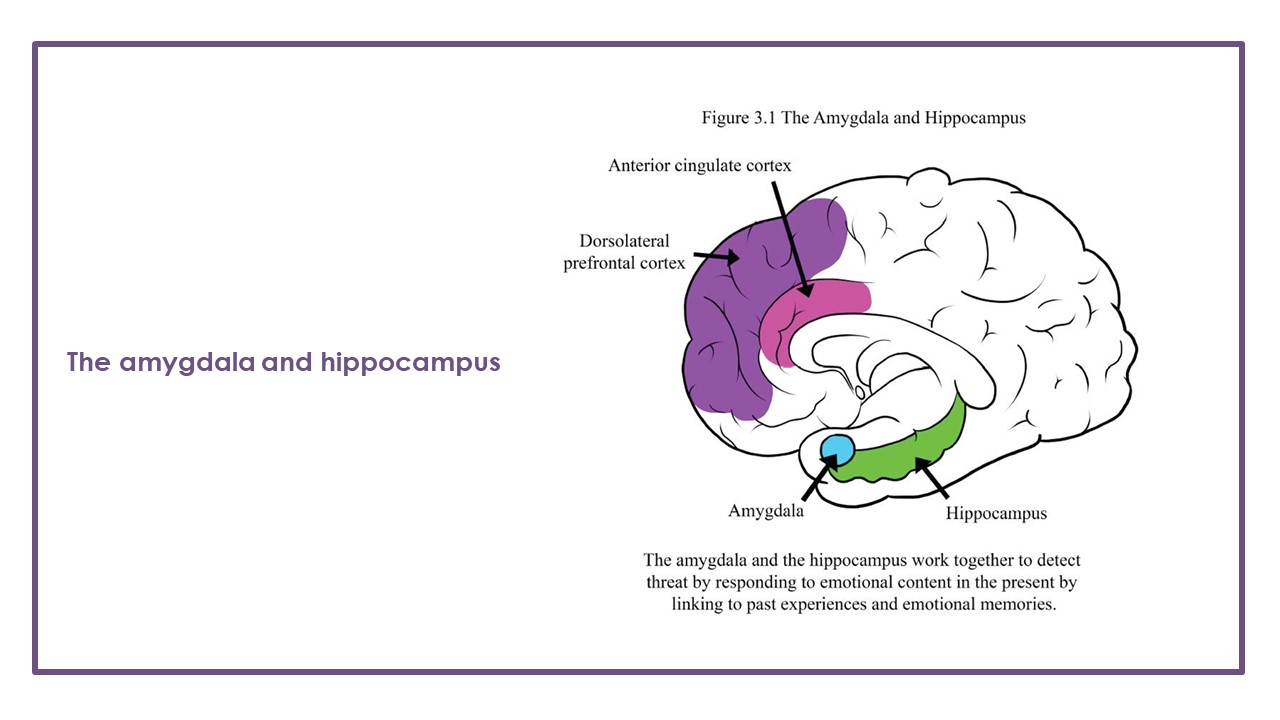
When you perceive that you are in a threatening situation you feel unable to cope with, then a cascade of things happen in the neurological, emotional and hormonal systems.
Messages are carried along nerves in the brain from the cerebral cortex, the place that regulates our thought processes and the limbic (emotional) system to the hypothalamus.
What is the hypothalamus?
The hypothalamus is an important regulator in the centre of the brain that controls the Autonomic Nervous System (ANS), which in turn controls all the automatic functioning of the body such as heartbeat, blood pressure, breathing etc.
When stressed the release of adrenaline and other physiological functions leads to the “fight and flight” response.
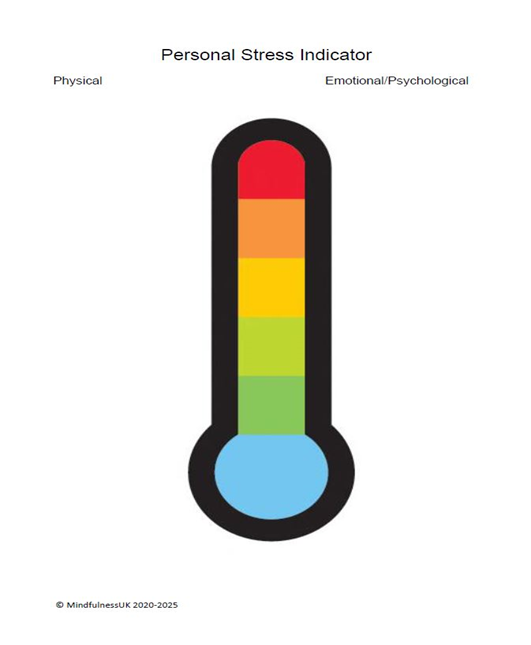
How does stress impact you physically and emotionally?
Our mindfulness and self-compassion practice helps us to gain greater self-awareness and acceptance of our experience, which enables us to:
- Identify how you feel in your heart, body and mind when you’re feeling calm and relaxed.
- Explore how things change as you start to feel more stressed.
How can Mindfulness and Compassion help?
When we can identify what causes us stress, we can
- Help reduce exposure to stressful situations, consciously avoiding emotionally challenging situations.
- Learn to take conscious control over our breathing, soothing the body through activation of the PNS
- Gain more perspective and clarity, see the bigger picture.
- Start to tap into the sense of common humanity – we all suffer and are not alone –which helps us feel more emotionally connected.
- Continuously stimulate the PNS, it turns down our stress response and over time our system becomes more balanced and calmer.
- Develop the capacity to self-soothe in emotionally distressing times, releasing oxytocin and other relaxing and bonding hormones.
- Feel more equipped to reach out for help, acknowledging our vulnerability.
- Turn towards our difficulties, allowing fear to dissipate as we face what we have been trying to suppress, using a range of defense mechanisms, which in turn cause suffering.
- Change the way we respond, move from reacting (autopilot) to responding (choice).
Stress-Performance Curve
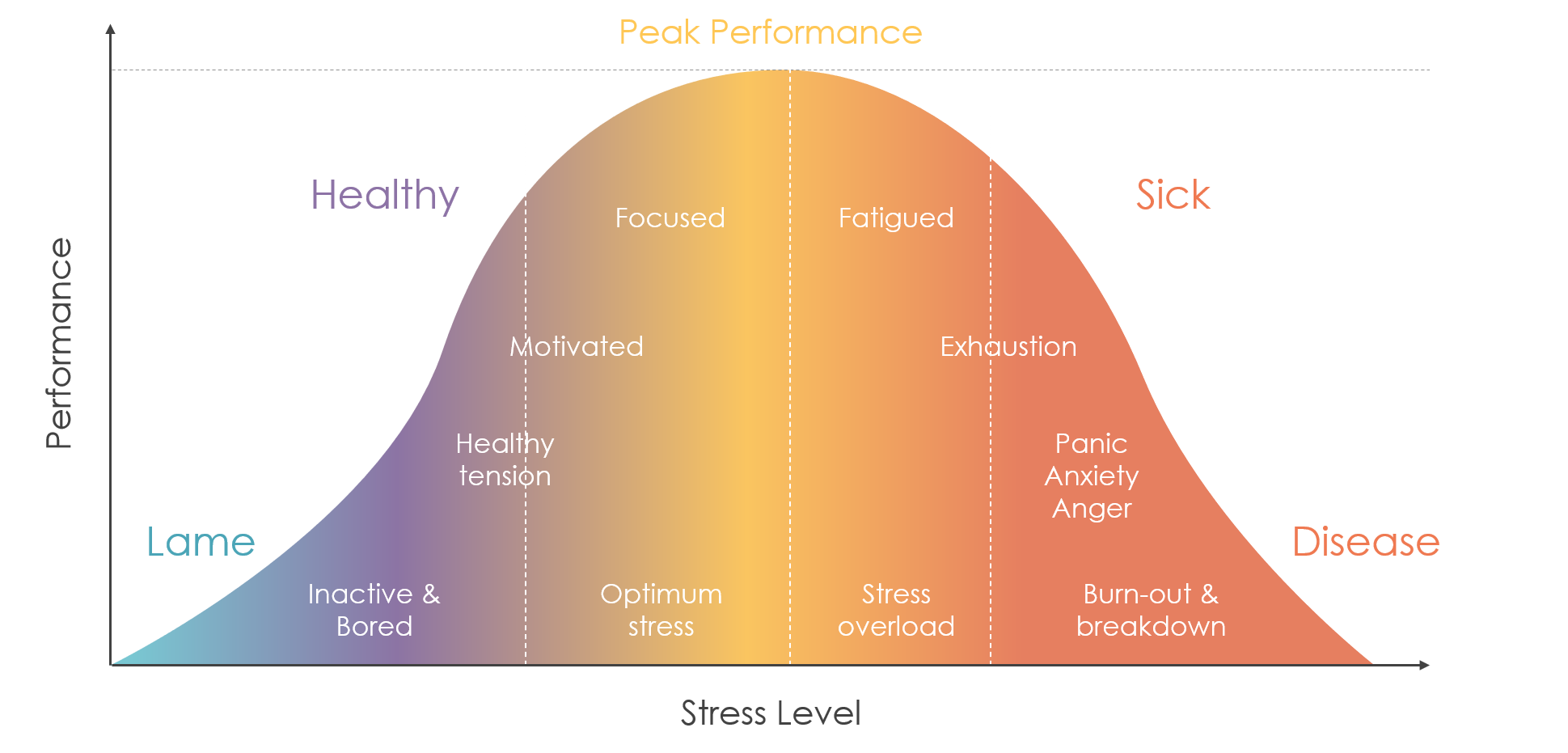
Remember that some levels of stress are good for us. Stress helps to motivate ourselves and to get things done. Stress stops being good for us when we get stuck in stress overload. With Mindfulness and Compassion we start to notice when we are stress and make choices to stop and look after ourselves.
The stress performance curve is another tool you can use to understand your own stress levels. Why not take a moment now and reflect where you are on the curve right now.
By learning ways to increase our perception and expression of our emotions and those of others, we learn to assimilate and understand our emotions more comprehensively. Mindfulness and compassion then helps us to regulate our emotions and empathise with the emotions of those around us, contributing to our sense of control and empowerment so that we can choose to live our lives and build healthier, more resilient relationships, imbued with more ease, equanimity , maturity and kindness.
Emotional Awareness
Mindfulness is a key tool in understanding ourselves, our own thoughts and feelings and what is important to us. It can help you develop self-awareness, which is the first component of emotional intelligence and is the basis for developing all the other emotional intelligence skills.
Emotional intelliegence can be cultivated through motivation and practice.
The first component is emotional awareness
- This involves increasing perception of your own emotions and those around you
- Noticing emotions without passing judgement
- Accepting your emotions as they are right now
- Understanding that everyone and everyone’s emotions are different in certain situations
- Knowing that everyone is doing what they do in the belief that this will make them happier
- Understanding that we are all products of our own conditioning
- Knowing that we have the capacity to change
As we become more aware of our emotions, we can start to learn the skills and traits that will contribute to positive change in our lives.
Language for emotions exercise
An exercise to explore our emotional language vocabulary
As we start to develop our self-awareness It’s useful to find words for our experiences and emotions. In this practice you will start to find the language for your emotions.
Emotional Application and Mind Traps
The next component of developing Emotional Intellingence is Emotional Application.
Mindfulness helps us to become more present, turning towards and investigating emotional triggers and exploring the resources we already have that are established in our lives to help us deal with our reactivity to these triggers. As we learn to respond rather than react, a sense of empowerment and steadiness prevails.
This then affords the opportunity for us to utilise our emotions for the benefit of ourselves and others.
By identifying mind traps or cognitive distortions that contribute to stress and fear, we can start to see our patterns more clearly.
This gives us the opportunity to acknowledge the negative emotions rather than trying to block them out. Thereby, we can master the emotion by working out where they originated. We can see more clearly that our reactivity is not our fault but is usually a combination of hardwired neurological processes aligned with social conditioning.
As we start to listen to ourselves more fully, we learn to understand our emotions and that of others more fully. This results in higher levels of empathy, by not only recognising our own suffering but also that of others too, resulting in a wish to support the alleviation of suffering.
Mindfulness is a tool that can help in knowing how and when to talk to others about their emotions with more skill, enhancing communication and building stronger, more resilient relationships.
Mind Traps
Everyone's mind, startled by challenge, responds spontaneously with an emotional state, characteristic to him or her.
These are known as hindrances.
These impede the mind's capacity to clearly asses what's happening. As energies, they ruffle the mind's surface and distort the truth. Mindfulness recognises these confusing energies and responses and enables you to see through them or around them so that good sense can prevail.
When a mind is concentrated, deeply relaxed and steady, filled with warm intention, upsetting thoughts and feelings arise, but they don't stick.
So concentration dissolves hindrances.
Negative self-talk
Self-talk is the way you communicate with yourself. It refers to your habitual ways of thinking and how you automatically interpret events.
Often this internal monologue is negative.
The beauty of mindfulness is that you can learn to treat these negative thoughts as mental events, rather than facts.
Break the habit of negativity
By becoming familiar with your own negative thought patterns you can then become mindful of when you might be falling into your traps.
See if you can recognise any of the more common traps in yourself and your responses to situations.
Catastrophising
Catastrophising is a style of thinking that amplifies anxiety. It's a what-if game of worst case scenarios. An example would be telling someone that it's raining pretty hard, and they respond with "yes, it seems like it will never stop. It's going to floor and we're going to lose our crops".
Exaggerating the negative
Exaggerating the negative and discounting the positive. For instance "I'm doing better at this work but I'm still making mistakes". This discounts the positive and gives more power to the negative. Experiment with replacing "but" with "and" to give both aspects equal weight.
Mind reading
Mind reading involves convincing yourself what other people are thinking and feeling and why they act as they do, without actual evidence. For instance, you may incorrectly assume that someone doesn't like you. Such misinterpretations can lead to anxiety and depression.
The eternal expert
Being the eternal expert is a recipe for heightened stress, as it necessitates being constantly on guard.
Should, should, should
The shoulds are an all too common thought pattern that can lead to guilt or anger in addition to stress. You may apply your list of shoulds to yourself and others, and no one will reach your expectations.
Blame
Blaming involves holding others responsible for your own pain or holding yourself responsible for the problems of others. If you perceive the solution lies outside of you, you deprive yourself the power to effect change.
By labelling our response we can depersonalise it. We can create space and thence choice to instigate mindfulness.
What are your mind traps? How do they affect how you think, behave, relate to yourself and others?
Emotional Management
Emotional Management is the final component for developing Emotional Intelligence. It relates to how emotional intelligence can be imbued into daily life in a practical and life-enhancing way.
As we develop the skills through mindfulness and compassion practices of how to regulate emotions as they arise, we develop a more advanced internal locus of control. This offers us the capacity to take appropriate and effective action and take responsibility for the choices we make about how we live our lives.
This is accomplished by periodically reflecting on how we feel in the moment and bringing kindness to this as we become more aware of the neurological processes and conditioning underpinning these emotions.
In our heated interactions with others, we are often overwhelmed by the functioning of the limbic system, but mindfulness and compassion can help us to reconnect with the pre-frontal cortex, the more rational, thoughtful part of the brain, thereby maintaining a sense of control and equilibrium.
When difficult emotions arise, we feel them and also have the resources to cope with them more effectively, not letting them overwhelm and impinge on life for hours, days or weeks to come.
It’s very common to feel quite “stuck” sometimes, especially in our emotional patterns and mindful awareness helps us to shift from here and also observe the impact on those around us. Short, mini meditations can really help us to create space around difficulties, offering us the opportunity to reflect and also self-soothe.
In summary, emotional management allows us to
- Learn how to regulate our emotions.
- Strengthen our ability to govern and control our emotions.
- Reflect on how we’re feeling periodically.
- Deal with situations where negative emotions arise.
- Approach the task with the right resources to cope more effectively.
Compassionate mindful movement exercise
The following video takes you through the Compassionate Movement Meditation practice.
Find somewhere private or put your headset on and listen to Karen guide you through the practice.
This video runs for about 10 minutes.
After the video has finished, remember to do your after practice inquiry.
Spend a little time, perhaps a minute or two, in reflection, noticing what the experience was like, asking yourself questions such as these:
- What did you notice inside your body?
- Did you notice where in your body you felt emotions?
- Were you aware of what was happening in your mind?
- How did you react when you noticed what your mind was doing?
- Did bringing awareness to your thoughts change your experience?
- Is there a familiar pattern emerging here?
- Can you identify your experience with other areas of your life, your relationships for example?
- How do you think it would feel to bring compassion in here?
- How could you transfer what you have learnt through this practice to benefit your life?
Practice for Module 3
Congratulations on reaching the end of Module 3.
Remember to take your time to practice, use your inquiry questions and journal, before moving on to module 2.
We recommend one week of practicing the Compassionate Movement meditation and to continue to evolve your language for emotions.
Do continue to bring mindfulness to your daily activities and make the other practices a part of your routine.